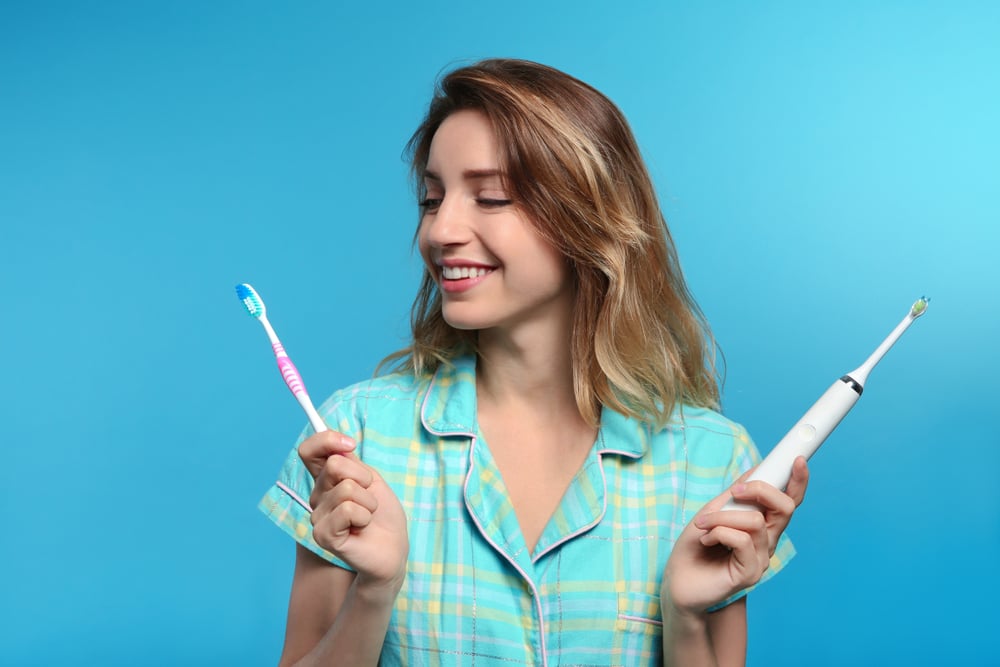
One of the most commonly debated topics in the dentistry field is whether electric or manual toothbrushes are better. For decades, manual toothbrushes were the only option, requiring patients to time their twice-daily brushing sessions for two minutes. Fast forward to the 20th century, and the first electric toothbrush was invented, changing the way we brush.
Electric toothbrushes are now mainstream, with many U.S. adults opting for the buzzing brush over manual ones. Though certain brands of both manual and electric toothbrushes have the ADA seal of approval, which one works better? Continue reading to learn whether you should grab a manual or electric toothbrush next time you need to replace yours.
Invention of the Toothbrush
We grab our toothbrushes twice daily to clean our teeth and remove plaque and germs, but have you ever paused to think about how this handy device was invented? Let’s rewind thousands of years ago to 3500-300 B.C., when the first toothbrush was invented by the Egyptians and Babylonians, made from twigs. Fast forward a bit to the 1400s, when the concept of a bristle brush was invented in China, made of pig hair and wood or bone sticks. Following the invention of the bristle brush, many designs emerged, including some with horsehairs and feathers.
Bristle brushes with animal fur were used until the late 1930s, when nylon was invented, and made softer in the 1950s. Manual toothbrushes have advanced significantly and can clean teeth much better than thousands of years ago, when animal fur was used. The original concept of toothbrushes is still used today, but has advanced significantly.
Introduction of the Electric Toothbrush
Did you know that the first electric toothbrush wasn’t designed for everyone? Originally developed by a Swiss dentist in 1954, the first electric toothbrush was designed for those with difficulty using their fine motor skills. It was designed to allow these individuals to effectively brush, making it easier to use for those with disabilities or injuries. While the electric brush moved much more slowly than modern electric toothbrushes, it paved the way for advanced technology.
Fast forward to the 60s when sonic power was introduced, offering stronger power with gentle vibrations, making electric toothbrushes more effective at cleaning teeth. Sonic toothbrushes became available to everyone, not just those who had disabilities or injuries. Presently, electric toothbrushes have many smart features, including timers, adaptive technology, and smartphone connectivity.
Electric Toothbrush vs. Manual
After taking that quick history lesson, are you wondering which is better: an electric toothbrush vs. a manual one? The answer isn’t a one-size-fits-all approach; every person’s oral hygiene needs differ, whether due to tooth sensitivities, disease, age, or certain oral health concerns. Below is a comparison that can help you determine which is better for your specific needs:
Cleaning Power
Compared to the manual toothbrush, the electric toothbrush has much more cleaning power. Because a manual toothbrush requires the individual to move the brush, the cleaning power depends on hand speed. Electric toothbrushes rely on sonic power, offering thousands of oscillations per minute. However, manual toothbrushes can still offer excellent plaque removal, but results depend on the user.
Gum Health
Gum health is far more important than most realize; gums are the foundation for overall oral health. Healthy gums lay the foundation for a healthy smile that increases comfort and confidence, while unhealthy gums cause discomfort, inflammation, and even gum disease. Did you know that brushing roughly can negatively impact gum health? Pushing too hard while brushing can create inflammation and bleeding gums, among other issues. Likewise, an excellent brushing and flossing routine will remove plaque and bacteria that can cause gingivitis and periodontal disease.
Manual toothbrushes can maintain healthy gums when used properly to remove plaque and bacteria, helping to prevent gum disease. However, brushing with too much pressure or not effectively can cause gum issues, causing gum disease and other oral health conditions. Some electric toothbrushes have sensors that pause the toothbrush when excessive pressure is applied to the gums, improving gum health. While manual toothbrushes can keep gums healthy, their use depends on the user to avoid excessive pressure and ensure the teeth are properly cleaned.
Cost
Manual toothbrushes are often far less expensive than electric toothbrushes. Most manual toothbrushes cost a few dollars, whereas electric toothbrushes can cost around $15 for battery-operated to $200+ for rechargeable. Electric toothbrushes require the brush heads to be replaced every few months, whereas the entire manual toothbrush must be replaced since the head doesn’t detach. However, manual toothbrushes will almost always be more affordable, making them more accessible.
Oral Health Concerns/Conditions
Manual toothbrushes require proper use to remove plaque. Failure to brush the teeth properly can increase the risk of gingivitis and gum disease; plaque left on the teeth will build up, eventually causing gum inflammation and bleeding. Electric toothbrushes are more effective at removing plaque and reducing the risk of gingivitis. According to the National Library of Medicine, electric toothbrushes reduce plaque by 21% versus manual toothbrushes.
Special Features
Electric toothbrushes boast special features that manual toothbrushes don’t, such as timers that notify the user when to switch to another section or when brushing is done. Some electric toothbrushes also have sensors that pause or beep when excess pressure is applied, or settings that allow users to customize brushing speed. While manual toothbrushes can be effective at cleaning, they don’t offer special features that electric toothbrushes do.
Comparing an electric toothbrush vs. a manual one can be unfair when analyzing extra features like timers, pressure sensors, sonic movement, and multiple brushing modes. However, when considering cost, manual toothbrushes are an affordable option that makes them easily accessible while still offering a deep clean if used properly and effectively. Ultimately, the choice of an electric toothbrush vs. a manual one depends on your budget and oral health care needs.
Trust Rhoades Family Dentistry with Your Family’s Oral Health
Rhoades Family Dentistry’s team of professionals includes dentists and hygienists who have extensive schooling and training to perform dental treatments, including improving tooth sensitivity. Dr. Hahn and Dr. Driscoll are members of the American Dental Association, the Academy of General Dentistry, and the International Association of Orthodontics, among many other organizations. They can help you determine which toothbrush is best for your individual needs and answer any questions you may have.
Rhoades Family Dentistry offers dental care for the entire family, including routine cleanings, preventative maintenance, fillings, and more. Dr. Hahn and Dr. Driscoll care about your family’s oral health and are here to recommend the best oral hygiene practices for your entire family, including Invisalign and braces, cosmetic dentistry, dental implants, whitening, and more.
Book an appointment today by scrolling up and clicking “BOOK AN APPOINTMENT” on the top left of your screen or by calling (913) 782-8900. We look forward to serving you with excellent dental care and helping your family achieve healthy smiles!