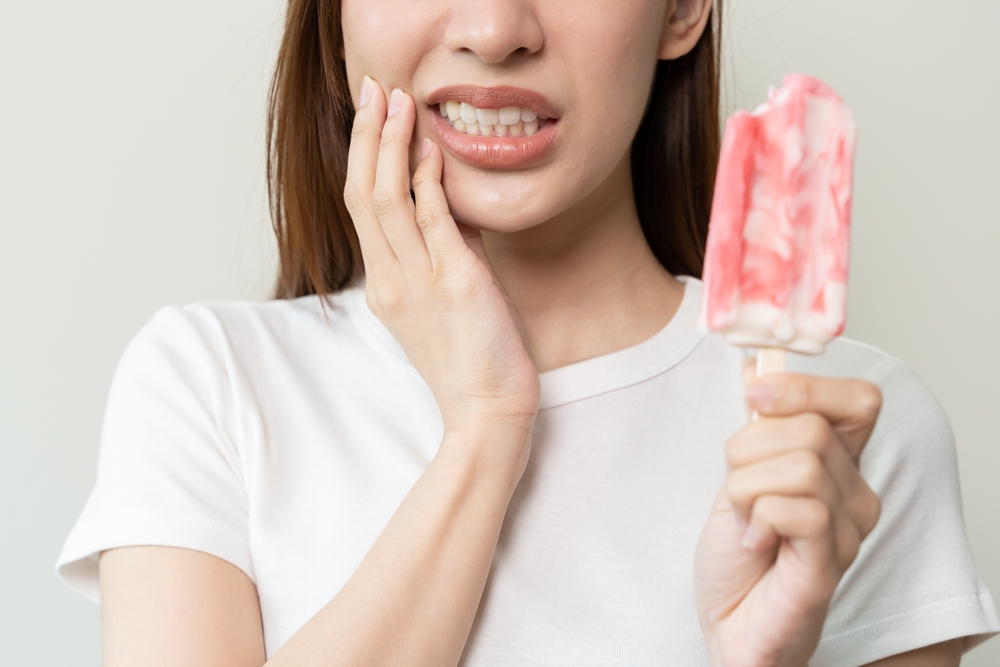
Have you ever taken a sip of an ice-cold drink or some hot soup, only to gasp and cringe as you experience sensitivity, forcing you to grab the side of your cheek as the feeling subsides? You’re not alone! Nearly 40 million Americans experience tooth sensitivity while they drink or eat sweet or cold/hot foods and beverages.
Though tooth sensitivity is common, it doesn’t mean it is normal and should be ignored. Continue reading to learn all about sensitive teeth, including what causes tooth sensitivity and when to see a dentist for treatment.
What is Tooth Sensitivity?
Did you know there are two different types of tooth sensitivity that people experience? While they’re both common and often result in the same reaction of wincing and cringing, they are very different. Dentinal and pulpal sensitivity have their own unique causes but have different underlying oral health conditions and concerns.
Dentinal Sensitivity
Dentinal sensitivity, a common kind of sensitivity, occurs when you experience that familiar pain throughout your entire mouth when you eat or drink foods at certain temperatures. Tooth sensitivity related to dentin occurs when the dentin—the layer beneath the enamel—is exposed due to the enamel and cementum layers wearing down and exposing the underlying dentin. Certain stimuli touching the dentin can cause widespread sensitivity to hot or cold temperatures. There are a few reasons for dentin sensitivity: damage caused by whitening treatments, cavities, aggressive brushing, damaged/cracked fillings, receding gums, overconsumption of acidic foods and drinks, and poor oral hygiene.
Pulpal Sensitivity
Pulpal sensitivity differs from dentinal sensitivity because it involves the center of the tooth—the pulp—being exposed to stimuli that cause sensitivity. Unlike dentinal sensitivity that often affects a widespread area, it usually affects a single tooth where the pulp is exposed. There are a few causes of pulpal sensitivity: dental decay or an underlying dental infection, habitual grinding or clenching, fractured or damaged teeth, or sensitivity following a newly placed filling.
Signs of Tooth Sensitivity
Most individuals can recognize tooth sensitivity because the discomfort is often sharp and hard to ignore. The sensation typically begins near the root of the affected tooth and can vary in intensity, from a brief, mild twinge to more pronounced pain. If your teeth are sensitive, you may notice discomfort when:
- Eating or drinking items that are hot or cold, sugary, or acidic
- Breathing in cold air
- Rinsing with cold water
- Brushing or flossing
- Using certain mouthwashes or whitening treatments
Since tooth sensitivity can stem from a variety of underlying issues, persistent worsening pain should never be ignored.
When to See a Dentist for Tooth Sensitivity
If you’re experiencing tooth sensitivity, it’s always a good idea to have a dentist examine your teeth and gums to ensure there are no serious underlying oral health conditions causing sensitivity. Scheduling an examination will help rule out conditions like gum disease, cracked or damaged teeth, or infections. While not every sensitive response to stimuli is a cause for concern, there are some warning signs that you should see your dentist:
- You notice visible damage to your teeth, such as chips or cracks in the teeth
- Over-the-counter tooth sensitivity treatments aren’t working
- Your gums are swollen/tender
- One specific tooth is sensitive
- Your tooth sensitivity discomfort is sharp or severe
Seeing your family dentist is a great first step for dealing with tooth sensitivity. However, there are some tooth sensitivity treatment options.
Tooth Sensitivity Treatment
While getting a dental exam is the best course of treatment for sensitive teeth, there are some tooth sensitivity solutions and dental sensitivity prevention that can help alleviate your symptoms:
- Implement gentle brushing and flossing
- Choose a softer-bristle toothbrush
- Use desensitizing toothpaste
- Use enamel-strengthening mouthwash
- Wear a nightguard to prevent grinding
If your tooth sensitivity isn’t relieved with the above simple solutions, your dentist can evaluate and determine whether advanced procedures are necessary. Stronger treatments can include prescription-strength toothpaste or rinses. A dentist can also apply a fluoride application with desensitizing agents to reinforce enamel and decrease sensitivity. For more extreme cases, like gum recession that’s causing tooth sensitivity, advanced treatment might be necessary.
Rhoades Family Dentistry Can Help Improve Your Tooth Sensitivity
Rhoades Family Dentistry’s team of professionals includes dentists and hygienists who have extensive schooling and training to perform dental treatments, including improving tooth sensitivity. Dr. Hahn and Dr. Driscoll are members of the American Dental Association, the Academy of General Dentistry, and the International Association of Orthodontics, among many other organizations. They can help you determine what’s causing your tooth sensitivity and the best course of treatment.
Rhoades Family Dentistry offers dental care for the entire family, including routine cleanings, preventative maintenance, fillings, and more. Dr. Hahn and Dr. Driscoll care about your family’s oral health and are here to recommend the best oral hygiene practices for your entire family, including Invisalign and braces, cosmetic dentistry, dental implants, whitening, and more.
Book an appointment today by scrolling up and clicking “BOOK AN APPOINTMENT” on the top left of your screen or by calling (913) 782-8900. We look forward to serving you by providing excellent dental care and giving your family healthy smiles!