They exist to replace missing teeth, keep other teeth from shifting, and help you chew, among many other functions. We’re talking about dental crowns and bridges, of course! Whether you already have a bridge or crown or are getting one soon, you’ve come to the right place to learn more.
Our team at Rhoades Family Dentistry has been placing dental crowns and bridges on a variety of patients for many decades and has expertise in the subject. Continue reading to learn everything you need to know about dental crowns and bridges so you can be prepared for your appointment and understand how to care for them.
What are Dental Crowns?
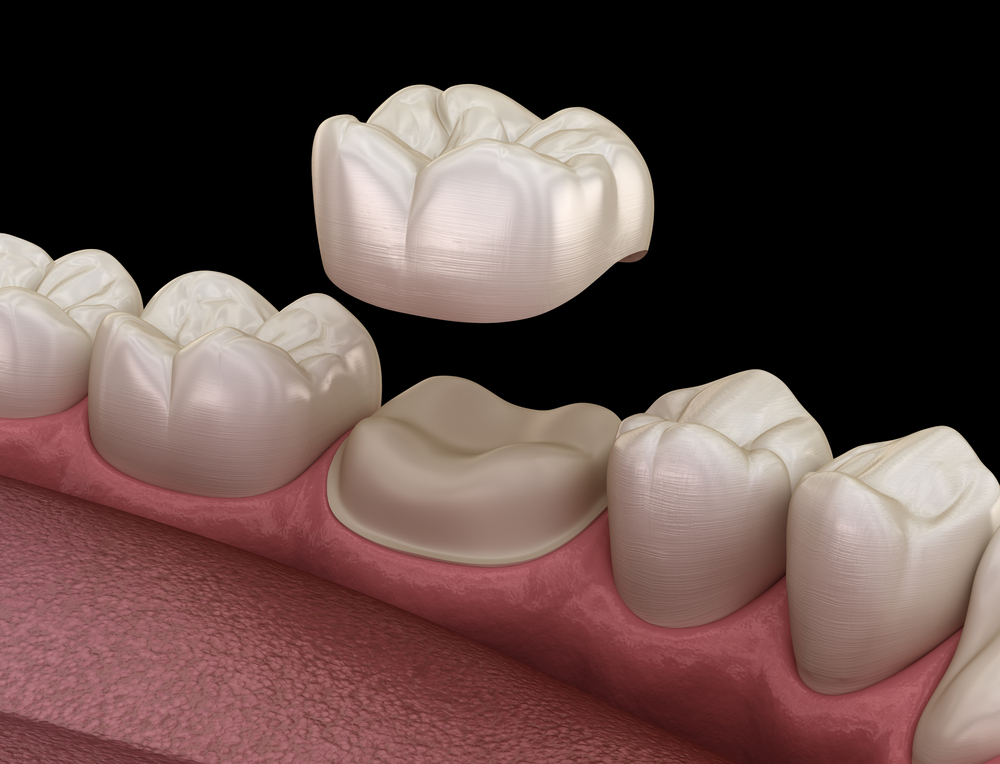
Not to be confused with bridges, dental crowns are caps placed over a broken or worn-down tooth to restore a patient’s bite and ability to chew. Dental crowns are used by dentists to snugly cover a weak or cracked tooth, a tooth that was treated with a root canal, or other dental work that caused the tooth to weaken.
Dental crowns are made from various materials, including metal, porcelain-fused-to-metal (PFM), resin, or ceramic. The best material for your crown will depend on a few factors: the strength of the material, whether the tooth is out-of-sight or visible, and whether or not a patient has a metal allergy.
Dental crowns can be either temporary or final. Oftentimes, a dental crown takes multiple appointments to place. First, the tooth needs shaping, requiring the dentist to remove some enamel and shape it for your crown to have a secure fit. Then, an impression will be taken of the teeth to ensure that a lab creates a custom-made dental crown that will securely fit your newly shaped tooth. Dentists will often place a temporary crown while the final one is being made, removing it and placing the final one at the second visit using a strong and durable dental cement.
What are Dental Bridges?
Unlike dental crowns that cover a weak tooth, dental bridges replace either one or multiple teeth in a row. Dental bridges are placed by dentists to literally bridge a gap between your existing and missing teeth to restore your bite and ability to chew.
There are several different types of dental bridges: traditional, cantilever, Maryland Bridge, or an implant-supported bridge. Traditional bridges are the most common, often used in patients who have teeth on either side of their missing teeth. Cantilever bridges are used when patients have only one tooth near the missing teeth. Maryland bridges are used when a patient has missing front teeth, while implant-supported bridges are often used when a patient needs multiple missing teeth replaced. The best type of dental bridge for your situation depends on what natural teeth you have surrounding the missing teeth and whether you have a dental implant, a crown, or the number of missing teeth.
A dental bridge procedure is similar to a crown; the surrounding natural teeth will need to be reshaped, an impression will be taken for the dental lab to create a custom-made bridge to fill your gap, and your dentist will give you a temporary bridge until your final one is ready to be placed.
5 Things You Need to Know About Dental Crowns and Bridges
Getting dental crowns and bridges can be intimidating, but it doesn’t have to be. Whether you have an appointment scheduled or know you’ll need a crown or bridge soon, take a look at five things you need to know about dental crowns and bridges before your appointment:
-
They Don’t Last Forever
Though they both have long lifespans, dental crowns and bridges won’t last forever. Dental crowns usually last up to 15 years, while dental bridges can last 10-15 years on average. How long your dental bridge or dental crown will last depends on the material of the crown or bridge, your dental hygiene, and the type of bridge or crown.
-
The Cost Varies
There’s no one-size-fits-all price for dental crowns and dental bridges. The cost varies greatly, depending on the patient’s insurance coverage, the material of the bridge or crown, the type of bridge or crown placed, and whether you need an implant, among other factors.
-
They Need Routine Brushing & Flossing
Just like your other teeth, dental crowns and bridges require routine brushing and flossing to help them last longer and keep your gums healthy. Bacteria can still collect around dental crowns and bridges, so maintaining an excellent dental hygiene routine is crucial. You’ll also want to ensure you visit your family dentist regularly.
-
They Can Chip/Crack
Though they’re made to last for years, dental crowns and bridges can chip or crack. Depending on the material used for the dental crown or bridge, how well you care for them, and whether or not you or your child grinds teeth, and your diet and nutrition, will determine whether or not your bridge or crown chips or cracks.
-
Teeth Can Still Decay
The tooth under a crown might decay if you don’t maintain proper oral hygiene. Likewise, the teeth surrounding a dental bridge can decay, weakening the support your bridge has to fill in the gap of missing teeth.
Trust Rhoades Family Dental with Your Dental Crown and Bridge Procedures
Rhoades Family Dentistry offers dental care for the entire family, including routine cleanings, preventative maintenance, dental crowns and bridges, and more. Dr. Hahn and Dr. Driscoll care about your family’s oral health and are here to help with your dental crown or bridge procedure.
Book an appointment today by scrolling up and clicking “BOOK AN APPOINTMENT” on the top left of your screen or by calling (913) 782-8900. We look forward to serving you by providing excellent dental care and giving your family healthy smiles!